
Introduction
For generations, the kangri has been part of daily life in Kashmir — tucked under a pheran, carried to school, kept close through the long winter months. Alongside it, the hamam and bukhari keep homes warm when temperatures drop below freezing. These traditions are part of what makes a Kashmiri winter bearable, and there's no need to abandon them. But when it comes to children, especially infants and toddlers, a few precautions make the difference between a warm winter and a trip to the emergency room.
As a pediatrician practicing in Srinagar, I see the same preventable injuries every winter season — kangri burns in toddlers, and occasionally, more serious carbon monoxide exposure in poorly ventilated rooms. Almost all of it is preventable with a few simple habits.
1. Kangri Burns: The Most Common Winter Injury in Children
The kangri's earthen pot holds burning coals close to the body — which is exactly what makes it effective, and exactly what makes it risky for small children. The most common injuries I see are:
Worried about your child's symptoms?
This article offers general guidance. Book a consultation for advice based on your child’s symptoms and history.
- Contact burns on the thighs, abdomen, or hands when a child falls asleep holding it or sits directly on it for too long
- Spills when an active toddler moves suddenly and coals scatter onto skin or clothing
- Prolonged low-heat exposure — even without a visible burn, sustained contact can cause skin irritation and, over repeated years, is linked to a rare skin condition in adults known as "kangri cancer." This isn't a concern for a single winter of childhood use, but it's a reason to build safe habits early.
Infants and children under 5 are at the highest risk, simply because they can't reliably judge heat or reposition themselves the way an older child or adult can.
2. Safe Kangri Practices for Families with Young Children
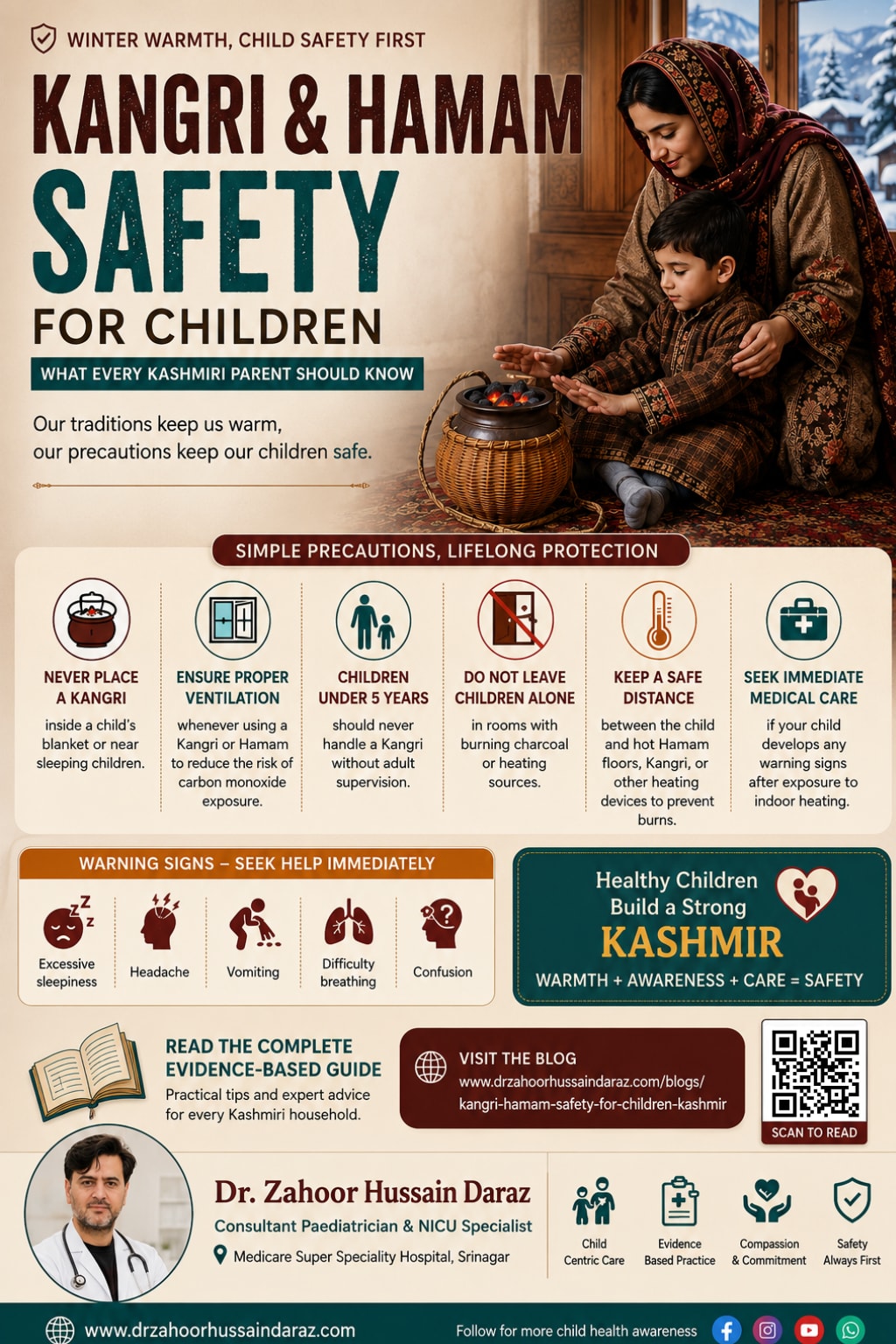
- Never let an infant or toddler sleep with an active kangri — this is the single most important rule. A child who dozes off holding one can sustain a serious burn before anyone notices.
- Always use a cloth or cover between the kangri and a child's skin or clothing — never direct contact.
- Supervise constantly when a child under 6 is near an active kangri; don't leave the room, even briefly.
- Keep coal levels moderate — a kangri packed too full increases both burn risk and the chance of spillage.
- Consider alternatives for very young children — for infants especially, layered woolens, a warm room, and a hot water bottle (well-wrapped, checked for temperature) are safer ways to keep them warm.
3. Hamam and Bukhari: The Carbon Monoxide Risk
Hamams and bukharis are usually safer than open kangris in terms of direct burns, but they carry a different, more serious risk: carbon monoxide (CO) poisoning in poorly ventilated rooms. CO is odorless and invisible, which makes it especially dangerous — by the time symptoms appear, exposure may already be significant.
Watch for these warning signs in a child (or yourself) after time in a closed, heated room:
- Unusual drowsiness or difficulty waking
- Headache, nausea, or dizziness
- Confusion or irritability that doesn't match the situation
If you notice these signs, get the child into fresh air immediately and seek medical attention — CO poisoning can worsen quickly and is a genuine emergency, not something to wait out.
4. Ventilation Habits That Prevent CO Buildup
- Never seal a room completely when a bukhari or hamam is running — leave a small gap for air exchange, even in the coldest weather
- Have the bukhari's flue and chimney checked each season before use, since blockages are a common cause of CO buildup
- Avoid running a bukhari through the night in a fully closed bedroom with an infant, if at all avoidable
- Install a CO detector if possible — increasingly available and affordable, and it removes the guesswork entirely
5. When to Bring Your Child In
Bring your child for evaluation if:
- A burn blisters, covers more than a small area, or is on the face, hands, or genitals
- A burn doesn't start improving within a couple of days, or shows signs of infection (increasing redness, pus, fever)
- Your child shows any symptoms suggestive of CO exposure after time in a heated, closed room
For minor burns, cool (not ice-cold) running water for several minutes, followed by a clean covering, is the right first step before deciding whether a clinic visit is needed.
Conclusion
There's no reason to give up kangri or hamam through a Kashmiri winter — they're part of how this region has stayed warm for centuries, and for good reason. A few consistent habits — supervision, proper covering, ventilation, and knowing the warning signs — let families keep the tradition while keeping children safe. When in doubt, especially with infants, a quick call to your pediatrician costs nothing and can catch a problem early.