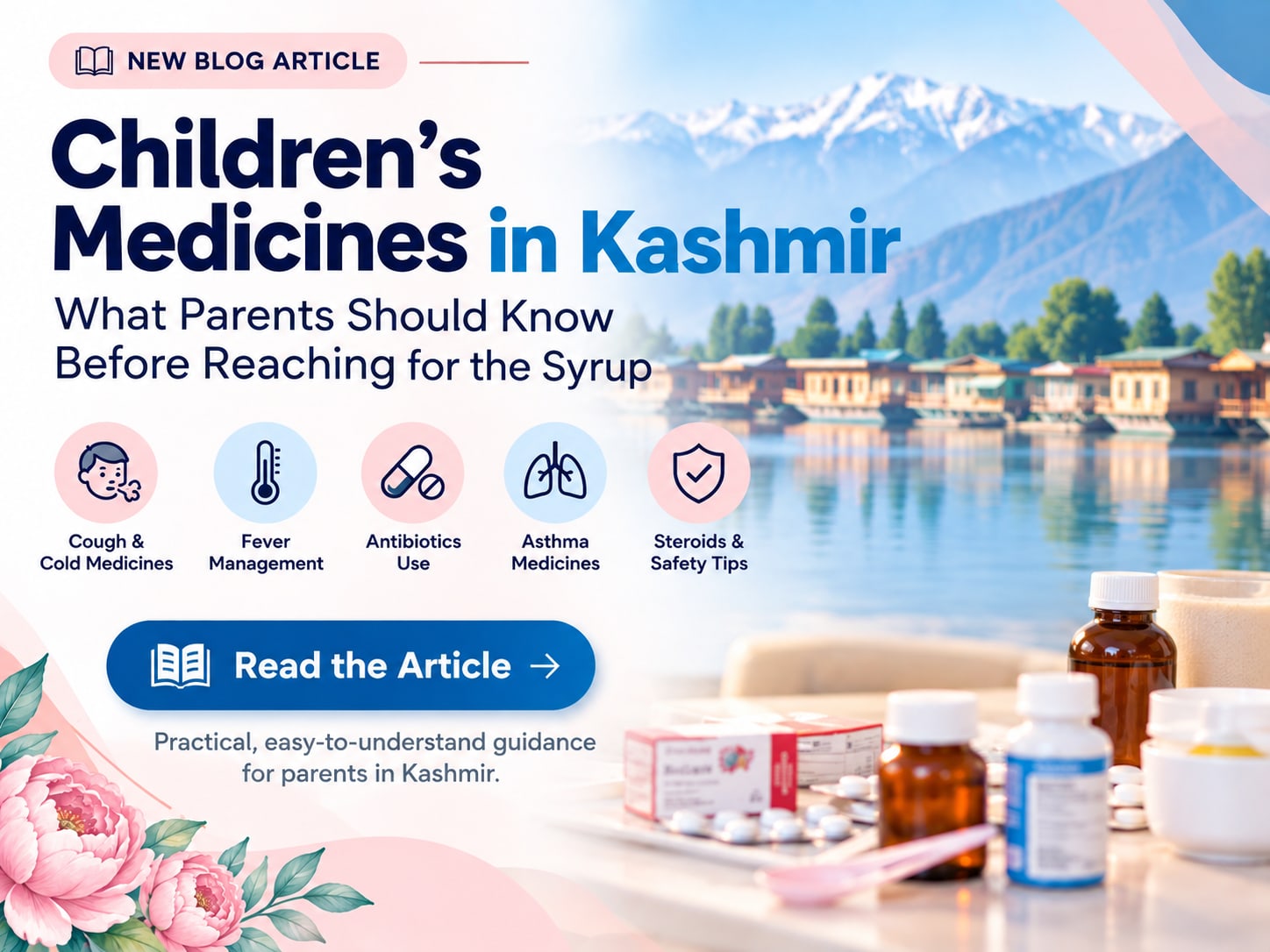

Most parents in Kashmir know the winter routine. The first cold snap arrives, the bukhari goes on, and within a few weeks clinic waiting rooms fill with coughing children. The prescriptions that follow carry names most parents have never heard: amoxicillin, salbutamol, prednisolone, montelukast. This guide explains what these medicines do, when they help, and where the common mistakes happen.
Why winter here is different
Winter in Kashmir usually runs from the last week of November to February. The surrounding mountains trap cold air and smoke in the Valley, and a study by researchers from the Indian Institute of Tropical Meteorology and the University of Kashmir found that Srinagar's winter air carried about five times the permissible level of fine particulate matter (PM2.5). Indoors, smoke from kangris and coal or wood bukharis irritates the airways and weakens their defences against infection. Children's airways are narrow, so a cold that an adult shrugs off can turn into wheeze or a chest infection.
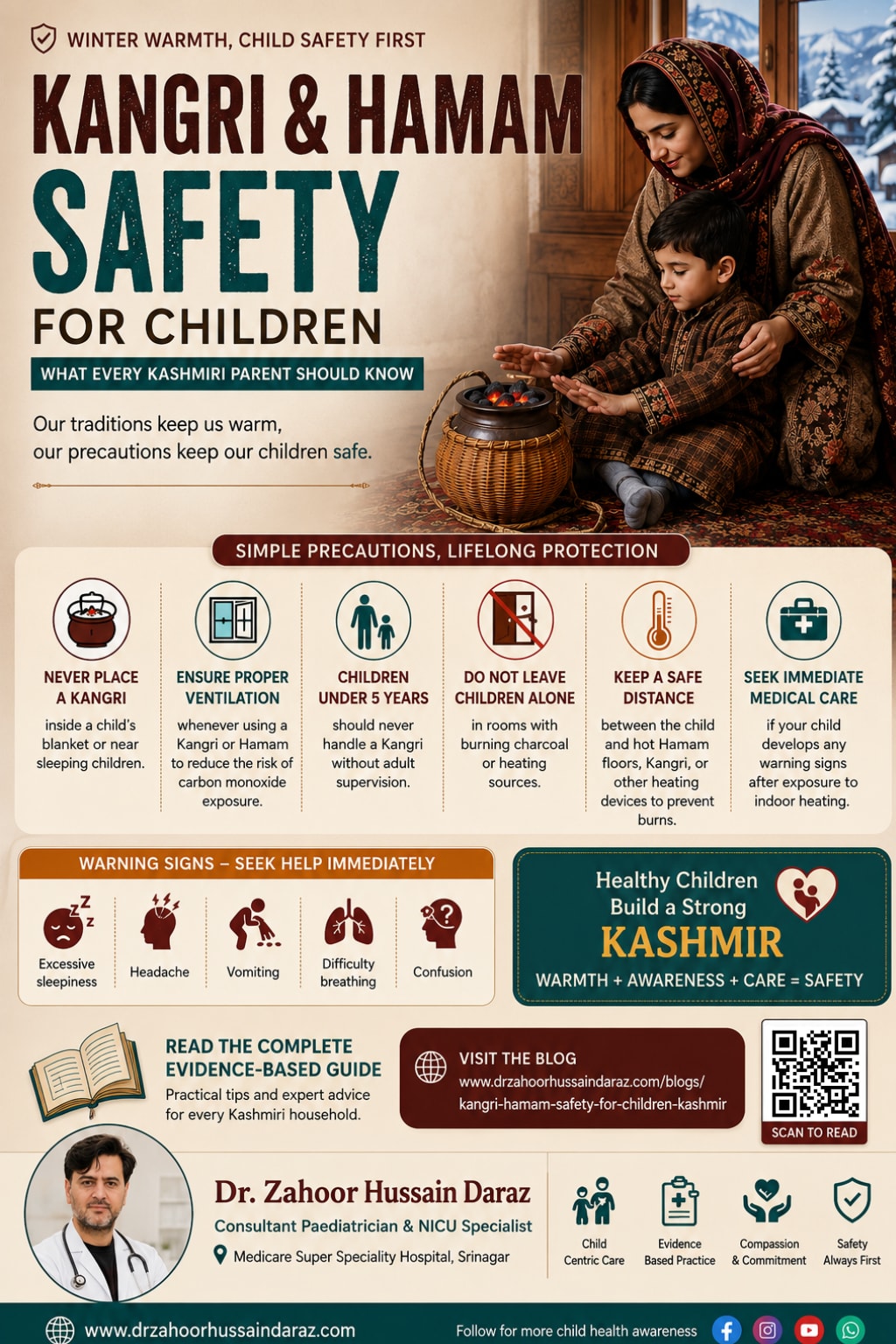
One warning matters more than any medicine here. Carbon monoxide from closed, heated rooms is colourless, odourless and tasteless, and SKIMS doctors have issued public advisories urging proper ventilation and CO detectors after families, including children, died from suffocation while using gas heaters. A child who is unusually drowsy, has a headache or vomits in a closed heated room needs fresh air and emergency care, not a syrup.
Worried about your child's symptoms?
This article offers general guidance. Book a consultation for advice based on your child’s symptoms and history.
"My child has a cough": the cough syrup question
This is where Indian rules have changed the most, and many families and chemists have not caught up.
- In October 2025, the Directorate General of Health Services advised that cough and cold medicines should not be prescribed or dispensed to children under 2 years, and are generally not recommended under 5.
- In August 2026, the Health Ministry restricted fixed-dose combinations of chlorpheniramine and phenylephrine for children below 4 years, with a mandatory label warning. This covers that specific combination, not every cough medicine.
- The drug regulator is now considering a prominent red label warning that cough syrup should not be used below 4 years.
Most childhood coughs are viral and settle on their own. What helps is fluids, saline nose drops, sleeping with the head slightly raised, and time. A child who breathes fast, pulls in at the ribs, or is too breathless to feed or talk should be examined the same day. Never give honey to a baby under 12 months.
"He has a fever": paracetamol and ibuprofen
Fever is the body doing its job. The aim of medicine is comfort, not a normal thermometer reading.
- Paracetamol is the usual first choice. Check the label of any cold syrup, as many already contain it, and double dosing is a common cause of overdose.
- Ibuprofen also works, but is not for babies under 6 months. Give it with food, and avoid it if the child is dehydrated or vomiting repeatedly.
- Aspirin is not a children's fever medicine because of the risk of Reye's syndrome after viral illness. It is used only when a specialist prescribes it.
See a doctor immediately if a baby under 3 months has a temperature of 38°C (100.4°F) or higher, or if fever comes with lethargy, persistent vomiting, a stiff neck or breathing difficulty. Fever lasting more than 3 days also needs review.
"Does he need an antibiotic?"
Antibiotics act only against bacteria. Most coughs, colds and sore throats are caused by viruses, which they do not touch. When one is needed, the choice follows the infection:
- Amoxicillin is the usual first choice for ear, throat, sinus and chest infections. It is affordable and generally well tolerated.
- Amoxicillin-clavulanate adds an ingredient that blocks the enzyme some bacteria use to resist amoxicillin. It is used for stubborn infections and bites.
- Cephalexin and cefdinir are cephalosporins used for certain skin, urinary, ear and chest infections.
- Azithromycin is a macrolide, useful when penicillins cannot be used.
Tell the doctor about any past allergy, complete the course exactly as prescribed, and never reuse leftover antibiotics from an earlier illness or a sibling. The wrong drug, dose or duration makes the next infection harder to treat.
Wheezing, asthma and allergy
- Salbutamol (called albuterol in the US) is the quick-relief medicine that opens the airways. If a child needs it more often than before, the asthma is not under control and needs review.
- Inhaled steroids such as budesonide or fluticasone are daily preventers. They work slowly, so stopping them once the child looks well often brings the wheeze back. Rinse the mouth after each dose.
- Oral steroids (prednisolone, prednisone) are short courses for severe flare-ups and croup. They are not the muscle-building steroids of gym stories. Short courses are generally safe, while repeated or long use needs supervision.
- Montelukast helps in asthma and allergic rhinitis. Report any change in sleep, mood or behaviour to the doctor while the child takes it.
Skin, thrush and everyday medicines
- Mupirocin ointment treats small patches of impetigo.
- Hydrocortisone is a mild steroid cream for eczema and bites. Use it only for the days your doctor specifies.
- Nystatin treats oral thrush and candidal nappy rash.
- Ondansetron is usually preferred for vomiting, because promethazine can slow breathing in children under 2.
ADHD medicines
Stimulants such as methylphenidate and amphetamine-based medicines are used only after a proper developmental assessment, with regular review of growth, appetite and sleep. They are not a shortcut for a child who is simply energetic.
Quick reference
| Group | What it does | Examples |
|---|---|---|
| Antibiotics | Kill or stop bacteria | Amoxicillin, cephalexin, azithromycin |
| Antifungals | Treat yeast infections | Nystatin |
| Airway and allergy | Open airways, calm allergy | Salbutamol, montelukast |
| Steroids | Reduce inflammation | Prednisolone, budesonide, hydrocortisone |
| Fever and pain | Ease fever and discomfort | Paracetamol, ibuprofen |
| Skin | Treat infected or inflamed skin | Mupirocin |
| ADHD | Improve attention and impulse control | Methylphenidate |
Safe medicine habits at home
- Use the syringe or cup supplied with the medicine, never a kitchen spoon.
- Doses depend on weight, so never copy a dose from a sibling's prescription.
- Keep medicines in their original packaging, out of reach.
- Ask the pharmacist to check that the syrup's ingredients match the prescription.
This article is educational and does not replace a medical examination. In an emergency, go to the nearest emergency department.